
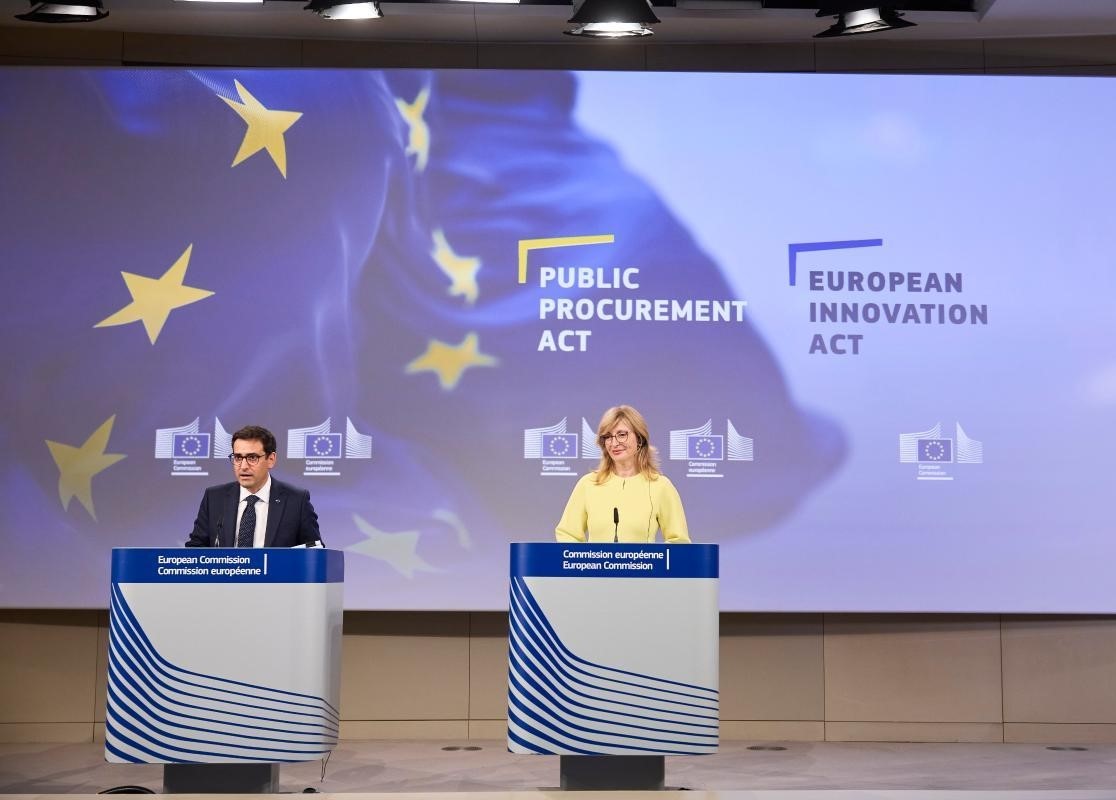
A single Regulation to replace the three 2014 Directives, greater weight for quality and new provisions for green procurement. The proposal presented on 9 September now opens the European negotiations on the future rules for public procurement.
On 9 September 2026, the European Commission presented its proposal for a new Regulation on public contracts and concessions, launching a far-reaching review of the EU public procurement framework. The proposal aims to replace the three 2014 Directives – on public procurement, utilities and concessions – with a single Regulation directly applicable in all Member States, with the objective of simplifying the current system and making it more coherent.
The reform also addresses the role of public demand. With public procurement expenditure accounting for around 15% of EU GDP, the Commission identifies public procurement as a strategic lever for steering investment and contributing to the Union’s economic, environmental and social objectives. Among the main changes is the greater weight given to quality in the evaluation of tenders. The proposal introduces the principle of “best quality for public money” and, as a general rule, provides for contracts to be awarded on the basis of the best price-quality ratio, with at least 30% of the score allocated to qualitative elements, rising to 50% for labour-intensive contracts.
For Green Public Procurement, the proposal provides clearer legal grounds for requirements related to the circular economy, energy efficiency and green procurement, including the possibility of establishing mandatory environmental requirements for specific categories. On the social side, it addresses, among other aspects, accessibility, gender equality, decent working conditions and collective bargaining.
Another relevant element concerns the move from setting criteria to monitoring their actual implementation. The proposal requires Member States to monitor the uptake of environmental, social and innovation criteria in their procurement systems and to publish the results annually.
The new framework also includes provisions on European preference, linked to the Union’s objectives on economic security, supply-chain resilience and strategic autonomy. Under the conditions set out in the proposal, public buyers may exclude certain tenders or apply evaluation preferences in favour of goods and economic operators from the Union or from countries covered by international agreements.
The text presented by the Commission does not yet constitute the new EU regulatory framework. The proposal will now be examined and negotiated by the European Parliament and the Council and may therefore be amended during the legislative process.
For Green Public Procurement, this opens a new phase in the European debate, which will determine the role that environmental and social criteria, quality and strategic procurement will ultimately play in the future EU public procurement rules.


