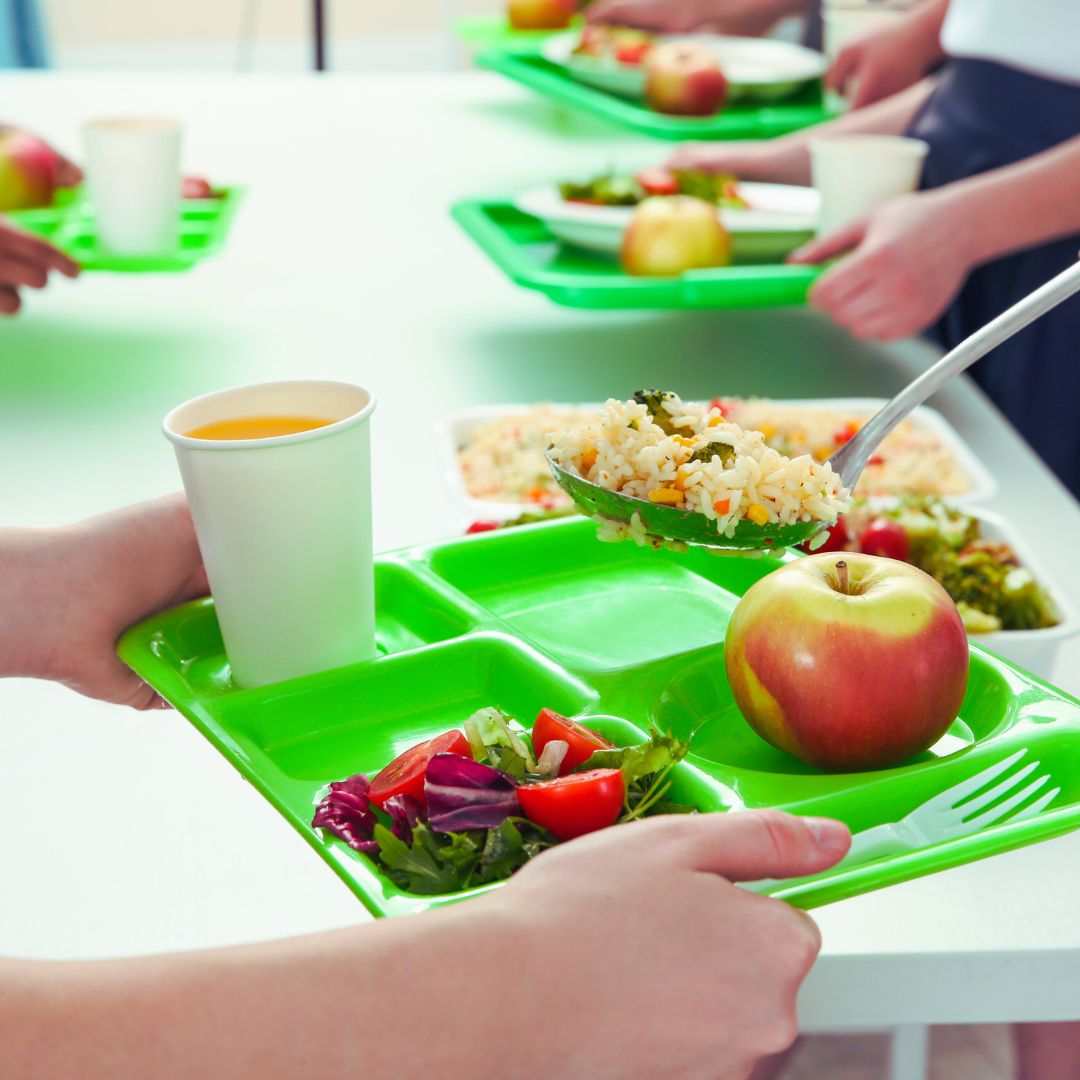
What if all public and school canteens in Europe had to comply with mandatory minimum criteria reflecting the need to keep our food system within planetary limits and in support of the implementation of the Sustainable Development Goals?
Some may object to increased costs, but as we all know by now, the costs of unsustainable practices related to any of these aspects are far greater for society and taxpayers. So why buy cheap, unhealthy food when the public food supply offers an excellent opportunity to address so many sustainability goals in one plate?
Buying better to get more is the intention of the Manifesto for establishing minimum standards for public canteens across the EU developed in the framework of the Buy Better Food Campaign in cooperation with several NGOs that are part of the EU Food Policy Coalition. The document calls for the definition of two general principles: good governance and market engagement. Vertical cooperation between different levels of governance (regional, national, and local) and cooperation between different departments is necessary to address national, European and global challenges in local dimensions. On the other hand, up-to-date knowledge of market structures, actors and technical and feasibility aspects is valuable for defining procurement objectives. Establishing a two-way dialogue with the market in the phase preceding the start of the public procurement process is crucial for sustainable procurement, confidence building and innovation.
The Manifesto suggests seven minimum mandatory criteria for the transition to more sustainable public food procurement models:
- Healthy food – 100 per cent of all public meals should be based on dietary guidelines that ensure sustainable and healthy food for all relevant age groups and social backgrounds.
- Organic and other agro-ecological products – At least 20% of food purchased is certified as organic and scores are given for agro-ecological practices that go beyond the minimum organic requirement.
- Support for small farmers – At least 10% of food comes from small farmers, defined by turnover, agricultural area and number of employees
- Climate action – 25% reduction in greenhouse gas emissions through more plant-based food, reduced food waste and a low-carbon food chain from farm to fork
- Decent working conditions – 100% compliance with decent working conditions in accordance with current regulations. collective labour agreements, as well as relevant national and EU legislation and international standards and encouraging the employment of vulnerable workers in the farm to fork food chain.
- Fair trade – At least 25% of products typically sourced from outside Europe, such as bananas, coffee and tea, must be fairly traded.
- Animal Welfare – A higher standard of animal welfare in combination with a higher content of plant-based foods.
The proposed objectives and criteria are provided as examples to inspire the European Commission and EU Member States (EU Farm to Fork strategy) as well as individual contracting authorities and central purchasing bodies to adopt similar practices
Organisations can support the Manifesto to give greater visibility to concerns and ambitions in the field of sustainable food supply. Buy Better Food provides a platform and connects local/regional governments, experts and policy makers with a common vision to bring about change together. Endorsement requires no further action on the part of the supporter.
To find out more and support the Manifesto, click HERE!